
Support looks different in every community.
We listen first.
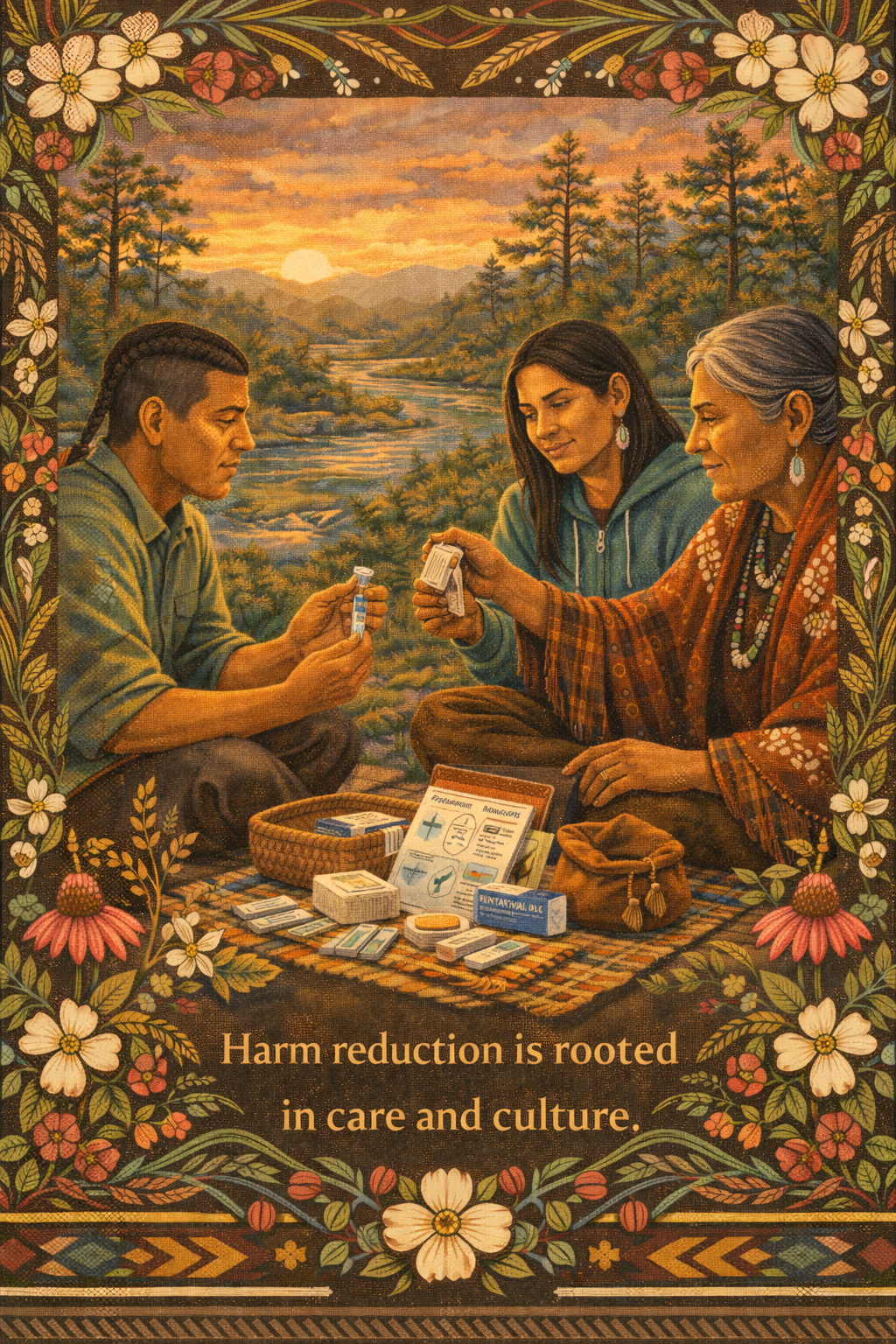
There is no “one-size-fits-all” approach.
Support is shaped by each community’s priorities.
-
Care coordination means helping people navigate systems that are often confusing, fragmented, or unsafe.
Our approach to care coordination is:
Person-centered and voluntary
Grounded in trust and confidentiality
Focused on reducing barriers—not adding requirements
We help connect individuals to services while honoring choice, culture, and autonomy.
-
The heart of this Network is the Cultural Liaison model.
Cultural Liaisons are trusted community members embedded within tribal communities and urban Indian organizations. They serve as bridges—connecting people to resources, supporting care coordination, and advocating for community needs at the state level.
Cultural Liaisons:
Are rooted in the communities they serve
Understand local culture, history, and relationships
Practice harm reduction with compassion and accountability
Strengthen trust between communities and systems
As the Network grows, Cultural Liaisons will help ensure harm reduction remains Native-led, culturally responsive, and community-driven across North Carolina.
-
Advocacy is a responsibility to our people. It means speaking truth about what Native communities face and ensuring policies reflect lived experience, cultural context, and real needs on the ground.
Policy Priorities
Our advocacy focuses on policies that:
Expand access to harm reduction services in tribal and urban Indian communities
Support overdose prevention and naloxone distribution
Reduce criminalization and stigma related to substance use
Invest in culturally responsive care coordination
Recognize tribal sovereignty in public health planning and funding
Include Native voices in statewide harm reduction decision-making
Policy should protect life, dignity, and community wellbeing.